
THE AMERICAN CIVIL WAR AND THE HEMINGWAY FAMILY
by Joan Costanza Meister (May 1, 2013)
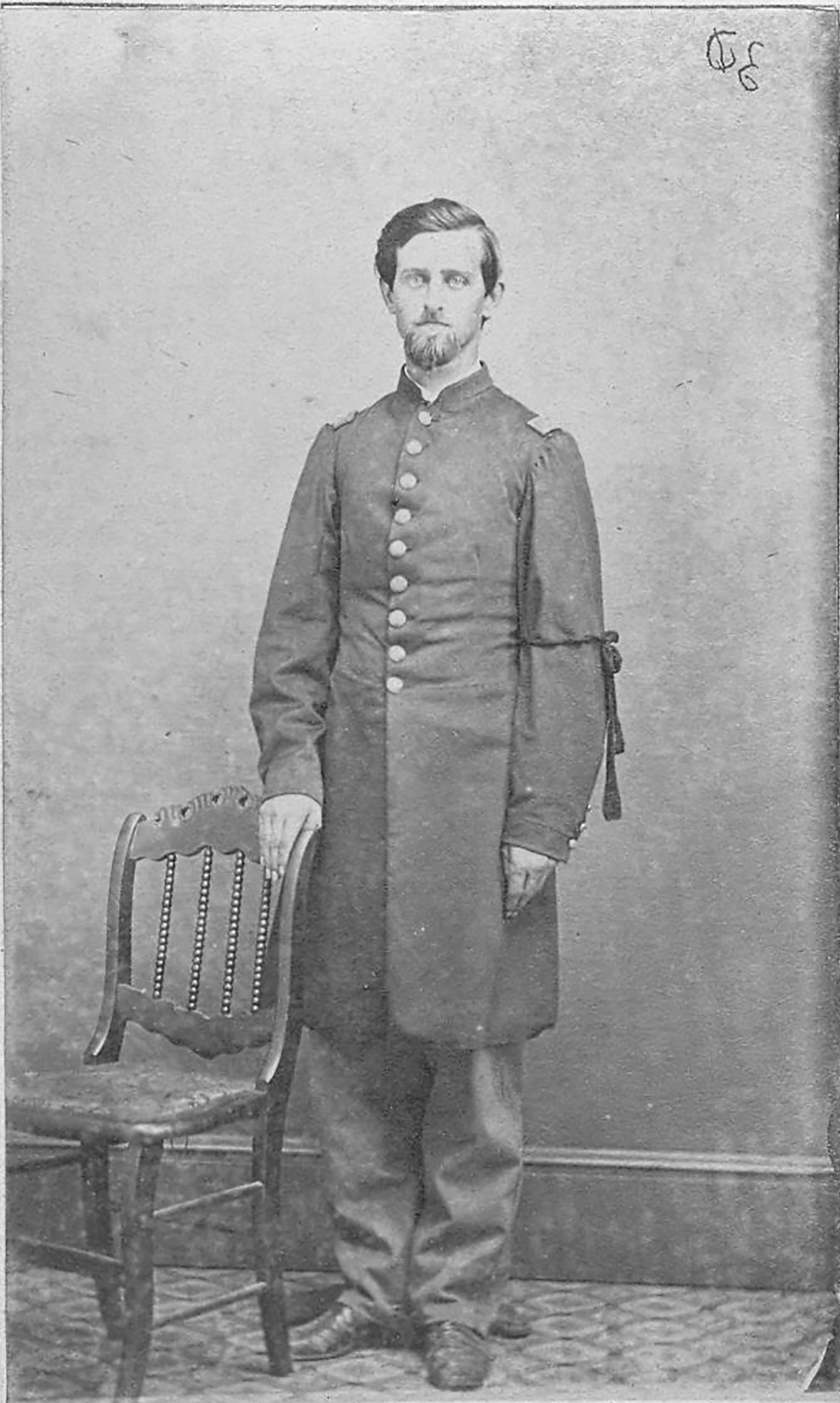
Anson Hemingway
On January 1, 1863 the Emancipation Proclamation went into effect. By that date Allen and Harriet Louisa Tyler Hemingway, recent transplants from Connecticut to Illinois, had already buried one son and had two other sons serving in the Union Army.
Six weeks after the firing on Fort Sumter, George Hemingway, age 19, joined the 18th Regiment, Illinois Infantry, Company I on May 28, 1861. Fourteen months later, on August 2, 1862 his brothers, Rodney, 27, and Anson, almost 18, Ernest Hemingway’s grandfather, were mustered into the 72nd Regiment, Illinois Infantry, Company D. Known as the Young Men’s Christian Association regiment, it was composed of men from Cook County.
Rodney and George were two of the five children born to Allen’s first wife, Marietta Lindsley. She died in 1842 at the birth of George. A year later Allen married Harriet and Anson was born on August 26, 1844. In Anson’s remembrances, he describes his mother as,
a brave beautiful Christian woman only 19 years old when she and father were married. He was 45 yrs. old & father of two boys . . . two girls… My mother cared for these 4 just as for her own—and the children of our 2nd group would never have known that there had been another mother if we had not been told about it.
Of the three brothers in the war only Anson returned. George died of dysentery in Cairo, IL on Oct. 17, 1862. Rodney, who was ill throughout his enlistment, was discharged in early April 1863 and died in a Memphis hospital on April 15.
Anson kept a Civil War diary from the summer of 1862 through 1863. On October 21, 1862 he sadly writes, “Father came here today. Brought the news that George was dead . . . Is going to take him home.”
Anson repeatedly wrote of illness that plagued the troops, his brother Rodney and himself:
Feb. 1, 1863, A cool day, I was camp guard. I have a toothache, Rodney was sick; Feb. 7, Rodney quite down . . .; Feb. 8: Rodney went to the hospital, He is quite sick; Feb. 20, Saw Rodney he is getting better; June 4, sent a letter home with Rodney’s death certificate.
In the Grand Army of the Republic war sketches, Anson recorded his memories:
My first battle was the siege of Vicksburg (May 18-July 4, 1863) and engagements around there---was in several ‘close’ places but no other engagements. Was never wounded, was never a prisoner, but had a very narrow escape while recruiting our Colored Regt. in Louisiana.
Anson was commissioned as a 1st Lieutenant in Company H, U.S. Colored 70th Regiment on March 30 1864 at Natchez, MS. The accompanying photo was taken in Natchez. Although the photo is not dated, it was taken after the assassination of President Lincoln in April of 1865. The braid and tassel on the left arm of Anson’s uniform was adopted after the assassination in honor of the dead commander- in- chief. (Information from the Civil War Reenactment Society)
In late February or early March 1866, Anson was discharged, nearly a year after the South surrendered. He returned home very changed, from the slightly-built, inexperienced seventeen-year-old to a man who commanded others in battle. He suffered the loss of two older brothers and many friends. He witnessed disease, suffering and destruction. His faith had sustained him during the war years as it would the rest of his life. On returning home, he was ready to accept the responsibility of being the oldest son of the Hemingway family, to continue his education, and to take his place in the middle-class society of Chicago and, ultimately, Oak Park, Illinois.
Note: This brief note on the military career of Anson Hemingway is taken from a longer unpublished paper by the author. A copy of which is in the Hemingway Foundation Archives.
This article was originally published in the Hemingway Foundation Summer Dispatch 2013.