
Does Hemingway Still Matter?
by Nancy W. Sindelar, Ph.D.
Nancy W. Sindelar, PhD. is author of two Hemingway biographies, Influencing Hemingway (2014 and 2016) and Hemingway's Passions (2025). She's a popular presenter on the life and work of Ernest Hemingway. She is a member of the International Hemingway Society and a board member of the Ernest Hemingway Foundation of Oak Park.
Summary
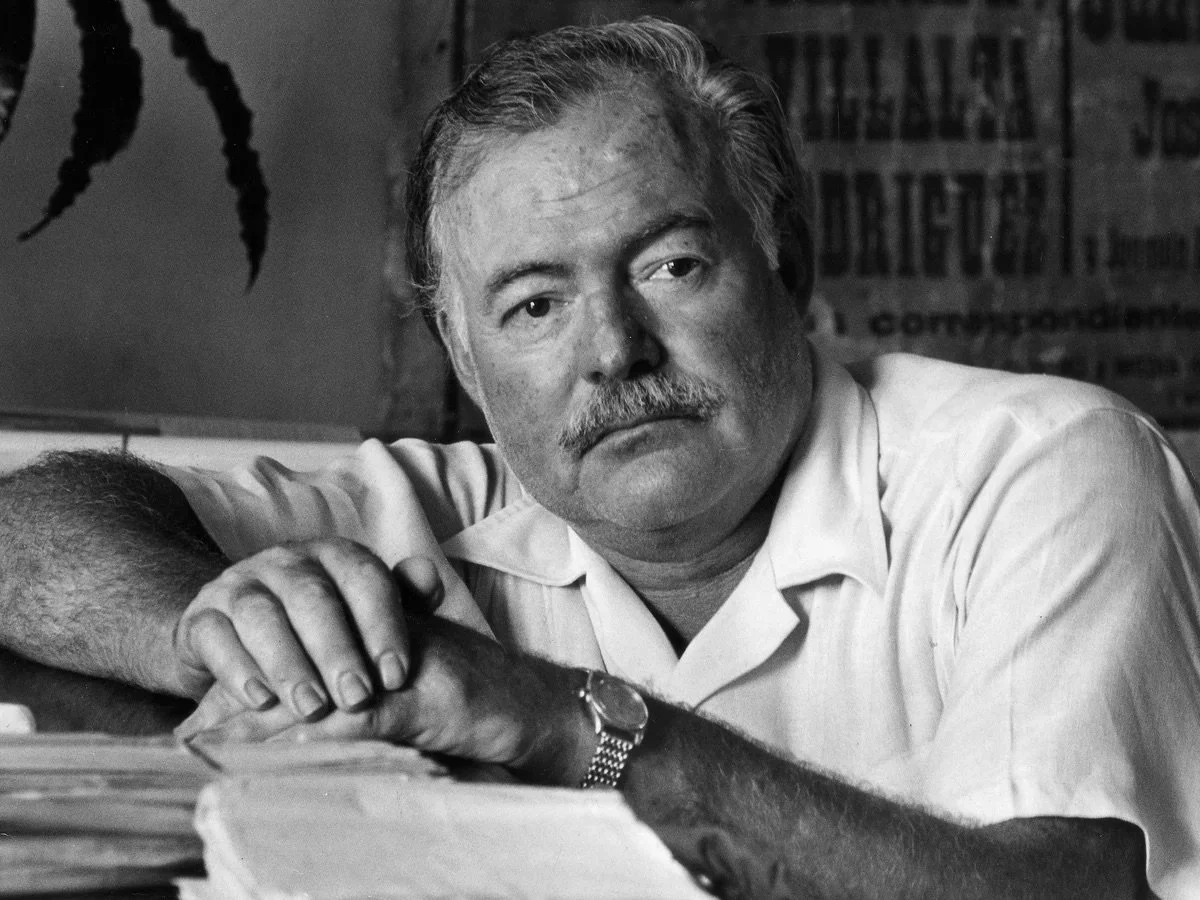
Recent scholarship has sparked debate about the relevance of Hemingway’s novels and short stories. Some of his most famous works are no longer staples in American Literature curricula, and it feels like Hemingway is under attack. His personal life, including his four marriages, has caused some to label him a chauvinist and a womanizer, while his female characters have been criticized for being too passive and too traditional. Similarly, the hyper-masculine images of his code heroes—personifications of the Hemingway masculine “code”— as well as his personal self-promotion as a great sportsman, lover, and warrior have been labeled as toxic.
This essay briefly reviews the attacks on Hemingway but argues that the themes in Hemingway’s novels and short stories are as relevant today as they were 100 years ago. As modern readers grapple with the wars in Ukraine, the Middle East, and elsewhere, Hemingway’s themes of alienation, isolation, and disillusionment still seem relevant. Though Hemingway may no longer command uncritical admiration, his works continue to raise good questions about the character and roles of women, the definition of masculinity, and the costs of war.
Essay: Does Hemingway Still Matter?
Recent scholarship has sparked debate regarding the relevance of Hemingway’s novels and short stories. Some of his most famous works are no longer staples in American Literature curricula, and it feels like Hemingway is under attack. His personal life, including his four marriages, has caused some to label him a chauvinist and a womanizer. His hyper-masculine images of his code heroes—personifications of the Hemingway masculine “code”—as well as his personal self-promotion as a great sportsman, lover, and warrior have been labeled as toxic, and his female characters have been criticized for being too passive and too traditional. This essay briefly reviews the attacks on Hemingway but argues that the themes in Hemingway’s novels and short stories are as relevant today as they were 100 years ago.
Personal Life
Ernest Hemingway’s personal life is as interesting as his literature. His passion was writing, but he was inspired by a lifetime of daring adventures and encouraged by the many women in his life. He nurtured his creativity by purposely seeking dangerous situations to test his own levels of courage, and his masculine, adventurous spirit appealed to women of all ages, including four wives and a long list of legendary actresses. Womanizer? Maybe, but one could easily argue that the women pursued him.
Approaching spinsterhood, first wife Hadley Richardson eagerly supported Ernest’s writing interests and donated her small trust to help finance their married life together in Paris. Then, friend Pauline Pfieffer—thinking she would be better for Ernest than Hadley—stole Ernest away and used her family’s vast resources to support and maintain their house in Key West, fund African safaris, and create trust funds for his children. While third wife Martha Gellhorn wasn’t all that interested in marriage, she was attracted to Ernest’s ability to navigate the frontlines and understand military tactics during the Spanish Civil War. However, after Ernest stole Martha’s job as war correspondent for Collier’s and she left him, there was another woman waiting to become the next Mrs. Hemingway. Mary Welsh Monks thought she understood Ernest’s needs. She divorced her husband, quit her job, agreed to move to Cuba, and, as quickly as possible, learned to speak Spanish and accompany her new husband on his hunting and fishing expeditions. After his death, Mary managed his literary estate and guarded his reputation.
There’s no doubt that there were a lot of women in Ernest’s life. However, his granddaughter, Mariel, justified his behavior as being artistic, saying, “Ernest made choices to love other women; at a deep level, those choices were a part of his art and his ability to write from a place of rare simplicity and raw emotion. Those passionate love affairs [often] became his wives, and the other women, who were his muses, gave him energy and poignant words to build his craft.”[1]
Ernest justified his behavior more simply. He was just being a man. In To Have and Have Not, he voiced his warning to women who expected their men to be monogamous, saying,
“[Men] aren’t built that way. They want someone new, or someone younger, or someone that they shouldn’t have, or someone that looks like someone else. Or if you’re dark they want a blonde. Or if you’re blonde, they go for a redhead. Or if you’re a redhead then it’s something else. …You can’t blame them if that’s the way they are.”[2]
Code Heroes
The hyper-masculine images of Hemingway’s code heroes also are under attack. The main criticism is that the ideal man living under Hemingway’s male code—stoic, physically courageous, emotionally closed, and a master of dangerous skills—suppresses vulnerability. Critic Leslie Fiedler argues that Hemingway's heroes flee intimacy and genuine emotional connection, treating women as threats to masculine autonomy.[3] Others add that the code is inseparable from dominance because the hero proves himself through violence (war, hunting, bullfighting) and through control of his environment, including the women in it. The stoicism that was once read as grace under pressure is now viewed by some critics as toxic masculinity.
Toxic or not, Hemingway’s views of masculinity were strongly influenced by the men in his life, mainly his grandfathers. Both were veterans of the Civil War, and his paternal grandfather, Anson Hemingway, inspired Ernest’s belief that war was the venue for men to display courage and honor. As Ernest grew up, he observed Grandfather Anson proudly wearing his Civil War uniform, displaying his medals, and marching with his comrades in the yearly Oak Park Memorial Day parades.
However, by the time Ernest was old enough to participate in a war, the rules of battle had changed. The romantic conceptions of the ancient art of war—hand-to-hand combat, sportsmanlike competition—that Ernest had learned from his grandfather were no longer relevant. After being a passive victim of an exploding Austrian mortar shell in the Italian trenches in World War I, he endeavored to show how a victim of modern weaponry could also be a courageous hero, and the Hemingway code was born. Like Robert Jordan, his code heroes “… learned the dry-mouthed, fear-purged, surging ecstasy of battle and …fought … for all the poor in the world, against all the tyranny….” [4]
Female Characters
Given Hemingway’s focus on men showing honor and courage in difficult situations, female character rarely exists independently of male need. Critics note that Hemingway's women are either compliant and idealized or predatory and destructive. For contemporary readers expecting complex female subjectivity, this is a serious limitation.
The central charge is that Hemingway's women exist to serve the hero's story, not their own.[5] Catherine Barkley in A Farewell to Arms and Maria in For Whom the Bell Tolls are prototypes of the compliant and idealized female. Catherine explicitly tells Frederic she will be whatever he wants her to be and doesn’t have much of a life outside him. Maria in For Whom the Bell Tolls also is criticized as she is a rape survivor who recovers through love of the hero and subordinates herself entirely to him.
Margot Macomber in “The Short Happy Life of Francis Macomber” and Brett Ashley in The Sun Also Rises are examples of Hemingway’s predatory and destructive females. They are independent, sexually assertive, and inherently destructive or emasculating to the men around them. Francis, Margot’s husband, is explicitly humiliated, emasculated, and viewed with contempt by his wife and his guide because he runs from a charging lion. Brett is sexually aggressive and “turns men into swine.”[6]
Whether compliant or predatory, Hemingway’s female characters are based on his personal experiences with the women in his life. It’s no secret that he had a lifelong love for the compliant and supportive Hadley and “wished [he] had died before [he] ever loved anyone but her.”[7] However, he knew some predatory and destructive “bitches” too. He openly modeled Margot Macomber after Jane Mason, whom he met returning from Spain aboard the Ile de France. Jane was twenty-two, strawberry blonde and unlike Pauline, who was seven months pregnant at the time, danced and drank with great enthusiasm. By the time they reached New York, Ernest was attracted to a new woman who enjoyed deep-sea fishing and pigeon shooting and had an adventurous personality streak. Initially, they were just friends. They fished on board Joe Russell’s Anita or Ernest’s cabin cruiser, Pilar, or shot pigeons at Club de Cazadores. A beautiful, accomplished sportswoman, Jane was easily drawn to Ernest and saw him freely, without her husband.
Ernest was intrigued by Jane’s beauty but eventually put off by her wealth and reckless behavior. Ernest claimed that “when I first knew [Jane] she’d been lovely,” but later said that Margot Macomber had been invented “complete with handles from the worst bitch I knew…. Not my dish, not my pigeon, not my cup of tea, but lovely for what she was and I was her all of the above which is whatever you make of it. This is as close as I can put it and keep it clean.”[8]
Is Hemingway Still Relevant?
So, does Hemingway still matter? My answer is yes. Despite criticism of his personal life, his male-centered plots, and his flawed characters, his novels and short stories are as relevant today as they were 100 years ago. Hemingway used his personal experiences and the people he met along the way to write about the good, the bad, and the ugly. He experienced the horrors of World War I, the Spanish Civil War, and World War II firsthand and filtered his experiences by writing about men (and women) facing death, separation, and alienation. Not all of his characters are likeable, but they are believable.
Though Hemingway may no longer command uncritical admiration, his works continue to raise good questions about the definition of masculinity, the character and roles of women, and the costs of war. Today, all we need to do is flip on our TVs to see the destruction in Gaza, the bombed-out towns in Ukraine, or experience the political divide at home. Hemingway still matters because, like him, we are confronted with the bloodshed of modern warfare and question the values and integrity of our political leaders. Like Hemingway we view the chaos of the world around us and then retreat to our private lives, hoping to find order and understanding and a way to move forward.
We long for world peace, economic security, and political stability but are routinely bombarded with scenes of bombed out towns, statistics on inflation, stories of political corruption, and the intoxicated chaos of the outside world. Hemingway’s novels and short stories resonate across time because they unite readers through the shared human experience of dealing with violence, separation, and change. They are timeless because they reveal universal aspects of the human condition and remind us that good literature has the power to bridge differences and connect us through the fundamental emotions we all share.
[1] Mariel Hemingway, quoted, Nancy Sindelar, Hemingway’s Passions. (Essex Connecticut: Globe
Pequot, 2025), Foreword.
[2] Ernest Hemingway, To Have and Have Not, (New York: Scribner, 1937), 238-9.
[3] Leslie Fiedler, Love and Death in the American Novel, (New York: NYRB Classics, 2026)
[4] Ernest Hemingway, For Whom the Bell Tolls, (Scribner, 1940), 235.
[5] Judith Fetterley, The Resisting Reader, (Bloomington, Indiana University Press, 1981)
[6] Ernest Hemingway, The Sun Also Rises, (New York: Scribner, 1926), 144.
[7] Ernest Hemignway, A Moveable Feast, (New York: Scribner, 1964), 207.
[8] Ernest Hemingway, “The Art of the Short Story” Paris Review, Spring 1981, 93.
Resources
Fetterley, Judith. The Resisting Reader, Bloomington: Indiana University Press, 1981.
Fiedler, Leslie. Love and Death in the American Novel, (New York: NYRB Classics, 2026.
Ernest Hemignway. A Moveable Feast, (New York: Scribner, 1964.
Ernest Hemingway. “The Art of the Short Story” Paris Review, Spring 1981.
Ernest Hemingway. The Sun Also Rises, New York: New York: Scribner, 1926.
Ernest Hemignway. A Moveable Feast, New York: Scribner, 1964.
Ernest Hemingway, “The Art of the Short Story” Paris Review, Spring 1981, 93.
Ernest Hemingway. To Have and Have Not, New York: Scribner, 1937.
Ernest Hemingway, For Whom the Bell Tolls, Scribner, 1940.
Sindelar, Nancy. Hemingway’s Passions. Essex Connecticut: Globe Pequot, 2025.