
Ernest Hemingway and G. K. Chesterton: From Journalism to Art
By Redd Griffin
In Ernest Hemingway’s short story, “The Three Day Blow,” Bill asks his drinking companion Nick to join him in a toast
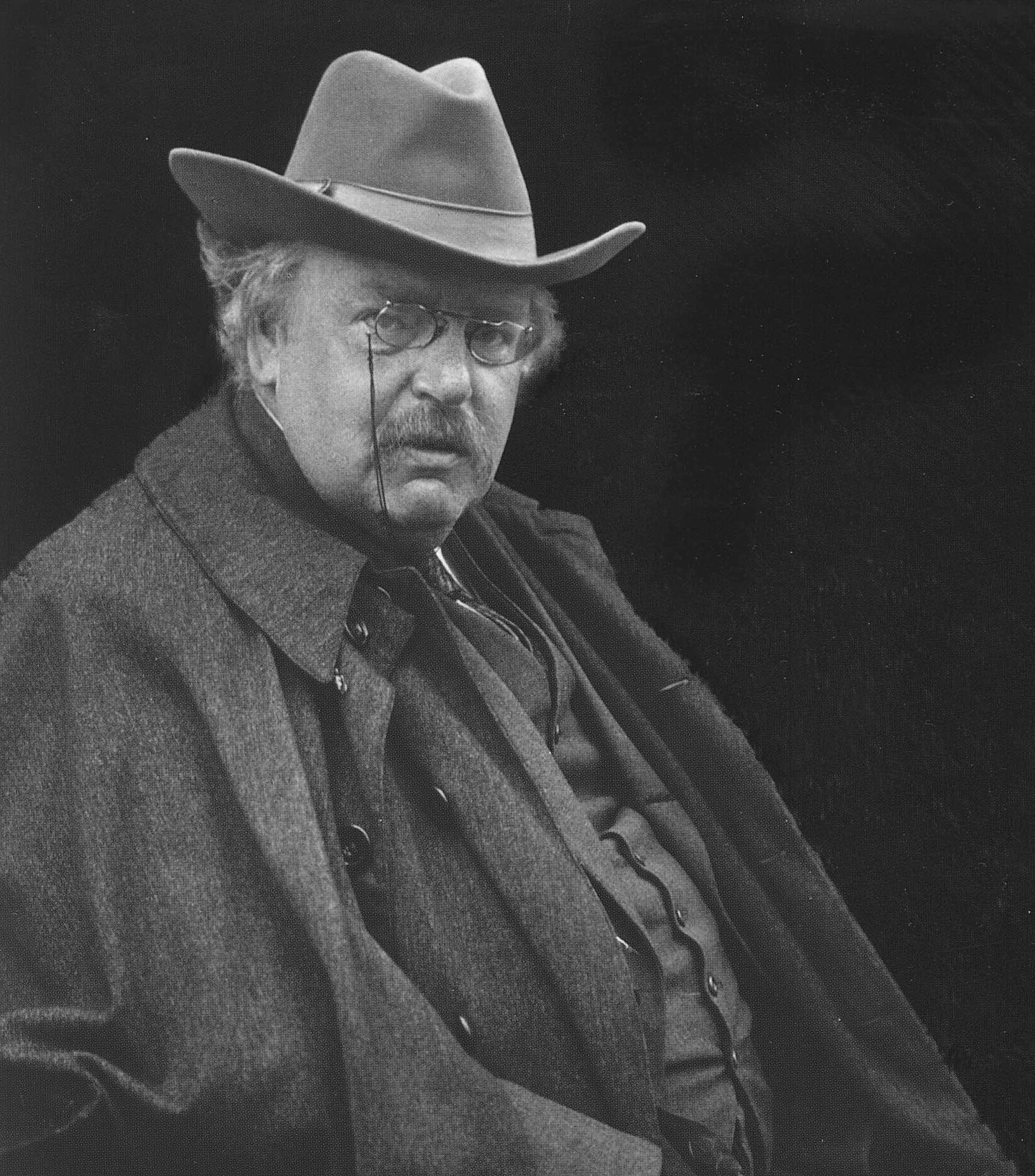
GK Chesterton
“Now let’s drink to Chesterton.”
Bill then recites lines from a poem by the English author G. K. Chesterton which support his and Nick’s enjoyment of drinking in an age forbidding it. Bill and Nick soon express candidly their controversial appreciation of life, which Hemingway and Chesterton share.
For the two authors there was truth in the firsthand experiences and honest reflections of ordinary people.
This truth was basic to Hemingway’s and Chesterton’s journalistic writing. They relied on their readers’ universal sensations, thoughts and feelings. They stirred them with vivid images and human interest stories. They drew readers along with familiar words arranged in clear, often poetic or dramatic patterns.
As literary artists, Hemingway and Chesterton built on what they did as journalists. They dealt more consciously with the universal in human nature. Their writing ranged from life’s elementary sensations to its grand visions, from the life of one individual to that of a whole society. They examined life from backgrounds rich with personal experiences and historical insights. Their writings reflecting on life, gave it more fully to their readers. Hemingway stressed life as it was; Chesterton, as it ought to be. In the authors’ words readers could discover the awareness common to all people.
Dale Ahlquist, president of the American Chesterton Society, speaks on journalism’s impact on the literary art of the two authors in his talk in Oak Park on September 29. Save that evening for “Hemingway and Chesterton: From Journalism to Art.” Check the Foundation’s website for further information, including the time and place of the program.
Redd Griffin (1938-2012) was Oak Park’s greatest champion of Ernest Hemingway, serving on the board of the Hemingway Foundation of Oak Park, which he co-founded in 1983. He was also a co-founder of the Wright Trust (1974) and the Historical Society of Oak Park-River Forest (1968). Griffin worked at the Chicago City News Bureau and WTTW. He also served as an Oak Park Township Trustee and a state representative of the state's 81st and 82nd General Assemblies.
This article is introduced an upcoming fall lecture and was originally published in the Hemingway Foundation Spring/Summer Dispatch 2005.