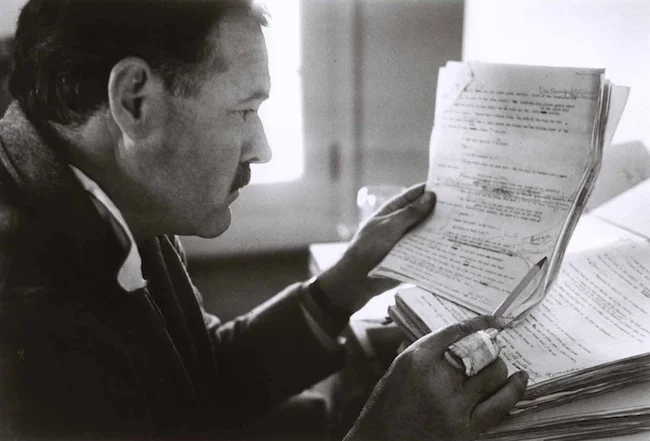
In Our Time: Searching for Order Amid Chaos
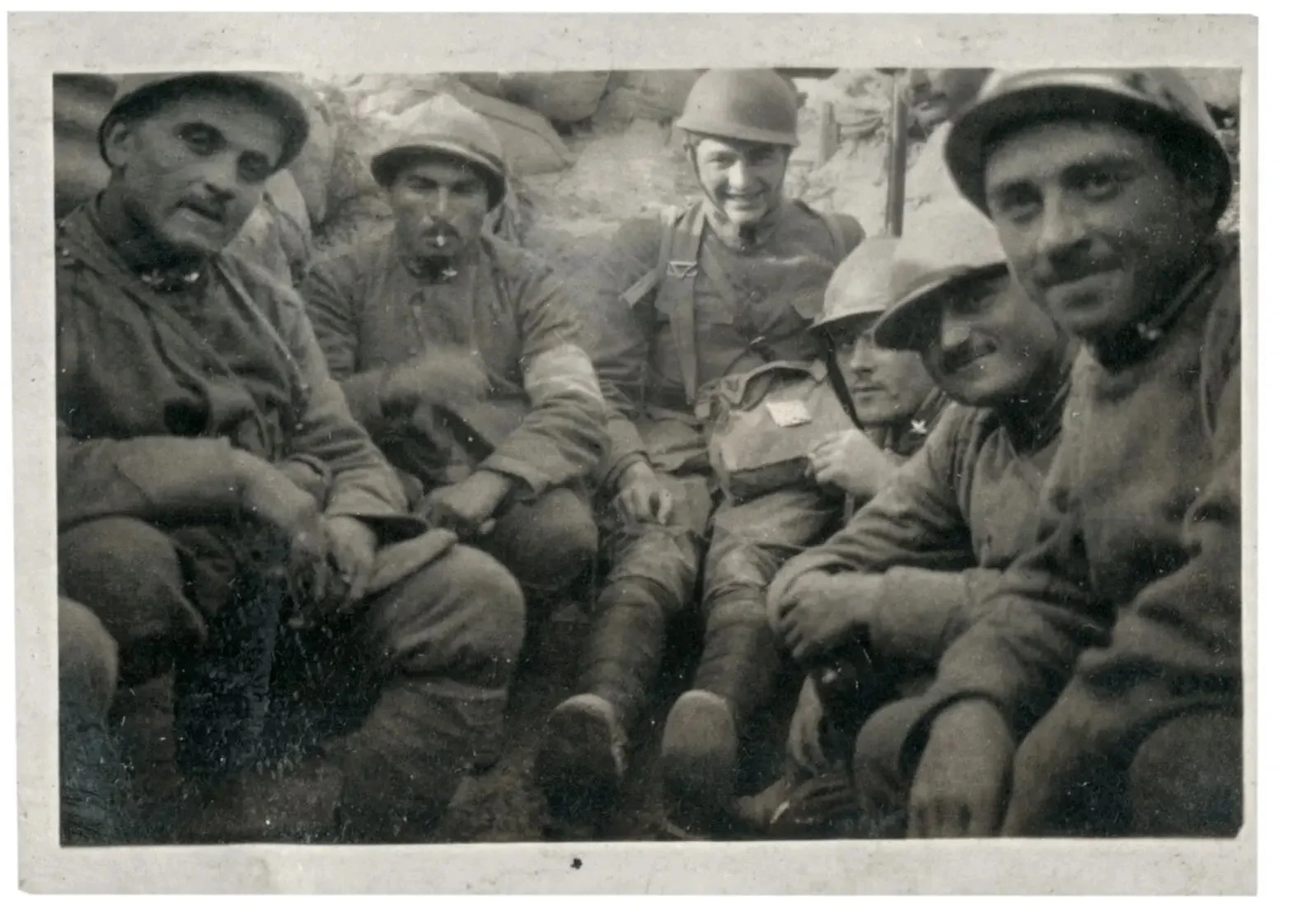
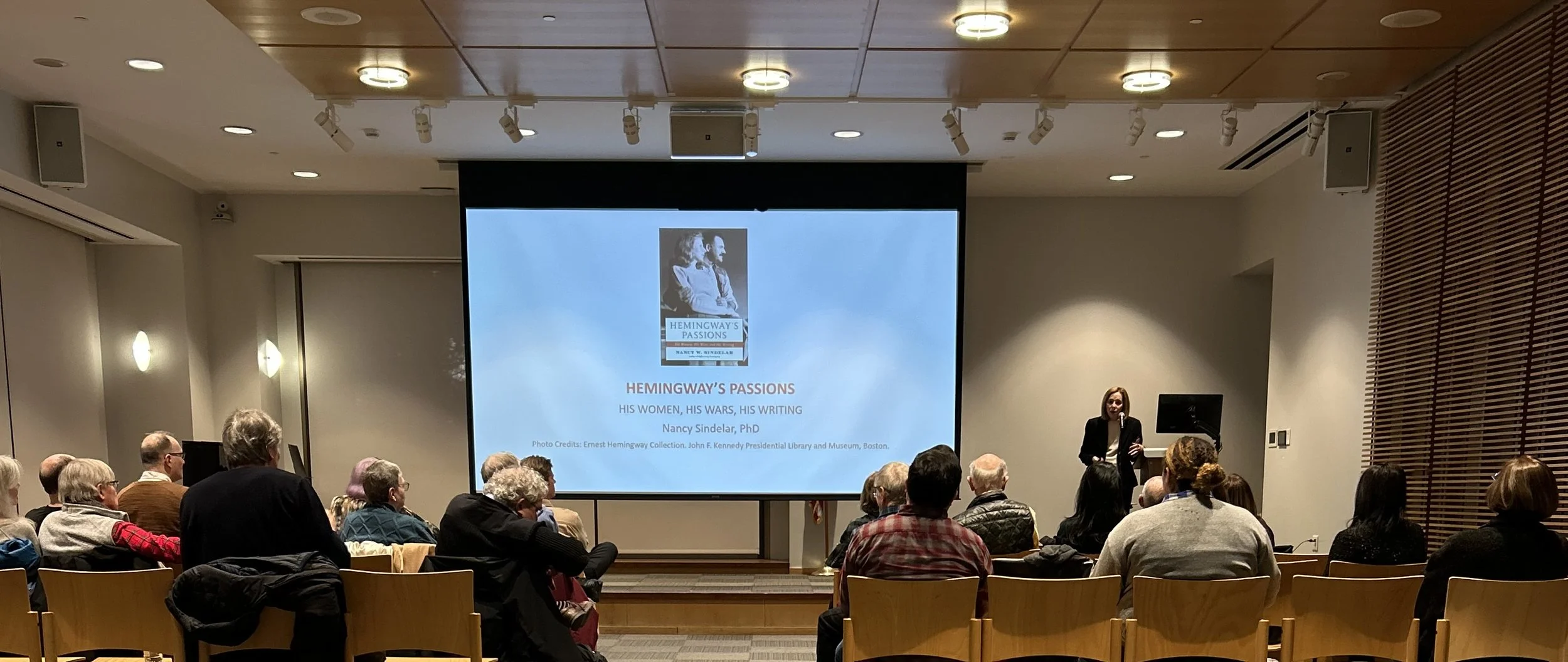
Ernest Hemingway published In Our Time in 1925, a year when people still were reeling from the impact of World War I. Hemingway and others had believed World War I was going to be the war to end all wars but quickly learned it was a futile blood bath. There were no heroes—just passive victims hit by shells in trenches, poisoned with gas, or scorched by flame-throwers.
By Nancy W. Sindelar, Ph.D.
Ernest Hemingway published In Our Time in 1925, a year when people still were reeling from the impact of World War I. Hemingway and others had believed World War I was going to be the war to end all wars but quickly learned it was a futile blood bath. There were no heroes—just passive victims hit by shells in trenches, poisoned with gas, or scorched by flame-throwers. The horrors of the war left the world filled with people who felt betrayed by their leaders, their culture, and their institutions. The war brought a basic disillusionment and the realization that the old concepts and values embedded in Christianity and other ethical systems of the western world had not served to save mankind from the catastrophes inherent in the war.
An experimental structure
This disillusionment is present throughout Hemingway’s In Our Time, a series of short stories interspersed with interchapter commentary (vignettes that had been published by themselves the previous year, 1924). The short stories are organized in largely chronological order and tell a single larger story about life circa 1925. Most are about Nick Adams, whose experiences closely reflect those of a young Hemingway. The short stories tell the tale of daily life but are juxtaposed against the interchapters which focus on the world of war, politics and the chaos of the outside world. The structure of the book was experimental. Hemingway said it was “Like looking with your eyes at something, say a passing coastline, and then looking at it with 15x binoculars—Or rather, maybe looking at it and then going in and living in it and then coming out and looking at it again.” [1]
Early influences
Hemingway’s personal experiences influenced the content. Born in 1899 and raised in Victorian era Oak Park, Illinois, Christian religious principles, a traditional education in public schools and a strong work ethic were imparted to Ernest as a child. His father, Dr. Clarence Hemingway, was a disciplined medical doctor and a devout member of the Congregationalist church. Ernest’s mother, Grace Hall Hemingway, liked to think of herself as an English gentlewoman. Her parents emigrated from England and eventually built the Queen Anne house with a turret and six bedrooms in Oak Park, where Ernest was born and spent the first six years of his life. During summers, the family left their comfortable life in Oak Park and went to their rustic cottage in northern Michigan, where Ernest’s father taught his son to hunt and fish.
Hemingway joins the war
Both of Hemingway’s grandfathers lived in Oak Park and were veterans of the Civil War. His paternal grandfather, Anson Hemingway, inspired Ernest’s belief that war was the venue for men to display courage and honor. As Ernest grew up, he observed Grandfather Anson proudly wearing his Civil War uniform, displaying his medals, and marching with his comrades in the yearly Oak Park Memorial Day parades. When the United States entered World War I in April,1917, Ernest couldn’t wait to get involved. Though he couldn’t enlist due to poor eyesight, he eventually went to Italy as a Red Cross ambulance driver, fully embracing the values and teachings of his grandfathers.
A different morality
The first eighteen years of Ernest’s life were idyllic. He had the love and attention of his parents and grandparents, yet he hungered to understand the challenges and actions needed to live in an ever-changing world. As time passed, he developed an autonomous morality, in which his personal standards were different from those of his parents. After graduation from high school, Ernest moved to Kansas City and got a job as a cub reporter for The Kansas City Star, but when the Red Cross came through town, he jumped at the chance to go to Italy and experience the war. He told his sister, “I can’t let a show like this go on without getting in on it.”[2]
Hemingway’s wartime injuries
Hemingway went to Italy looking for adventure and got more than he had bargained for. He soon learned war was a sordid bloodbath where one was required to carry parts of dead bodies, and risking sustained injuries that would last a lifetime. Ernest was hoping to display the honor and courage his grandfathers had talked about but was a passive victim, blown up in a trench while taking cigarettes and chocolate to Italian soldiers. When he arrived at the American Red Cross hospital in Milan, he had a machine gun slug in his right foot, another behind his right kneecap, hundreds of steel fragments lodged in his legs, and was swathed in bandages. He had learned that modern warfare was different from what Grandfather Anson had experienced. His worldview had changed, and he now understood that surviving in this world required new actions—actions that trumped some of the religious teachings of his parents and some of the manners and morals he had learned in Oak Park.
A rejection of pre-war values
After the war, Ernest returned to Oak Park then moved to Chicago, where he met Hadley Richardson. She supported Ernest’s dream of becoming a writer, and after their marriage, the couple moved to Paris and embraced all Paris had to offer. Paris in the 1920s was a mecca for artists and writers. Given the bloodshed of World War I, prewar values were rejected and there was much experimentation with new lifestyles, collaborations, and relationships. Expat artists and writers experienced greater acceptance in the European environment than in the prohibition-era United States, and new forms of art and literature thrived.
In Our Time is the work of a young Hemingway at the outset of his career; it is a pivotal piece in Ernest’s commitment to a new method of writing and a new set of values. Ernest tried to write clearly and honestly about life in the modern world. Writing to his father from Paris, he said, “You see I’m trying in all my stories to get the feeling of actual life—not to just depict life—or criticize it—but to actually make it alive. So that when you have read something by me you actually experience the thing. You can’t do this without putting the bad and the ugly as well as what is beautiful.”[3]
His letter to his father about the ugly as well as the beautiful was, no doubt, to prepare his parents for the transition to a new set of values. In Our Time documents questions that now concerned the author. What is bravery? What is fear? What constitutes a good relationship between a man and a woman? Answers to these questions were based on his experiences and described with honesty and images that were sometimes blunt, sexual, or bloody.
The format of In Our Time is an experimental combination of interchapters and short stories. The interchapters provide flashes of death, violence, and chaos in the outside world while the short stories focus on Hemingway’s personal experiences and document his efforts to bring order to his personal life by writing about it. They reveal his up-close-and-personal encounters with death, violence, and chaos.
Disillusionment with war
The book begins with the sentence, “Everybody was drunk” and reveals Ernest’s disillusionment with war. [4] There are no heroes, just drunk soldiers marching in a chaotic retreat. Though Ernest only read about it, the first interchapter is his reflection on the World War I Battle of Caporetto. The Austrians had broken through the Italian lines, and the Italians were retreating. Houses were evacuated, and women and children were loaded in trucks. Ernest first mentions the horror, confusion, and irrationality of modern warfare in In Our Time, but eventually will more fully describe the retreat in A Farewell to Arms.
His experience with Mussolini
Ernest’s negative depictions of the Italian army and his lifelong dislike of fascism were influenced by his personal contempt toward Benito Mussolini. He had interviewed him in 1923, shortly after he seized power, and in an article for the Toronto Star called him "the biggest bluff in Europe.”[5] Ernest had observed Mussolini trying to impress the media by pretending to be deeply absorbed in reading, while, in reality, he was holding a French–English dictionary upside down.
Near-death experiences
The interchapter prior to the Chapter 7 short story, “Soldier’s Home,” focuses on a soldier who had been blown up in a trench. The description mirrors Ernest’s own near-death experience in Italy as well as his growing ambivalence regarding prewar attitudes toward religion and sexuality. Fearing he will die, the soldier prays “Dear Jesus get me out…please keep me from getting killed…I’ll tell everyone in the world you are the only one that matters.”[6] However, the interchapter ends without transformation: “…he did not tell the girl he went upstairs with at the Villa Rosa about Jesus. And he never told anyone.”[7]
Alienation
The interchapter is followed by “A Soldier’s Home,” a short story that focuses a soldier returning home after World War I. The story begins with the background of the soldier’s life before the war. He attended a Methodist college and was a member of a fraternity. The photo of his fraternity brothers, all of whom were wearing exactly the same thing, represents the conformist mentality of prewar, Midwestern America. When the soldier returns from the war, he, along with Ernest, is troubled by the re-entry into his old life. He is changed by the war and feels alienated from everyone in his hometown, including his parents. He spends much of his time reading about the war but wishes there were more maps because he wants to pinpoint his experiences. Metaphorically, the soldier, like Ernest, is trying to understand and bring order to his war experiences. When the mother chides the soldier for not working by saying God cannot have any idle hands in his Kingdom, he replies that he is not in His Kingdom. Though he feels embarrassed for saying this, he no longer can pray with her.
Relevant to today
The interchapters and the short stories in In Our Time explore themes of death, separation, and alienation attached to World War I or periphery events. However, In Our Time is as relevant today as it was in 1925. Hemingway experienced the horrors of World War I firsthand and filtered his experiences by writing both the interchapters and the short stories. Today, all we need to do is flip on our TVs to see the destruction in Gaza, the bombed-out towns in Ukraine, or experience the political divide at home. Like Ernest, we are confronted with the bloodshed of modern warfare and question the values and integrity of our political leaders. Like Ernest we view the chaos of the world around us and then retreat to our private lives, hoping to find order and understanding. We long for peace, economic security, and political stability but are routinely barraged with scenes of bombed-out towns, starving children, and stories of political corruption. As we look through our 15x binoculars at our personal lives, we sense, like Hemingway, the intoxicated chaos of the outside world.
The themes of In Our Time are one hundred years old, but they resonate across time and unite readers through the shared human experience of dealing with violence, separation, and change. They are timeless because they reveal the universal aspects of the human condition and remind us that good literature has the power to bridge differences and connect us through the fundamental emotions we all share.
[1] Ernest Hemingway, Letter to Edmund Wilson, October18,1924 in Selected Letters 1917-1961, New York: Scriber’s Sons, 1981, Carlos Baker, ed.,128.
[2] Ernest Hemingway to Marcelline Hemingway, quoted in Sanford, At the Hemingways, Moscow: University of Idaho Press, 1999, 156-7.
[3] Ernest Hemingway, Letter to Clarence Hemingway, March 20,1925 in Selected Letters1917-1961, New York: Scriber’s Sons, 1981, Carlos Baker, ed.,153.
[4] Ernest Hemingway, In Our Time, New York: Boni and Liveright, 1925
[5] Ernest Hemingway, “Mussolini, Europe’s Prize Bluffer,”
Dateline Toronto, E.B. White, ed. New York: Scribner’s Sons,1967, 253-59.
[6] Ernest Hemingway, In Our Time, New York: Boni and Liveright, 1925
[7] Ibid.
Finding His Voice: Hemingway’s in our time, Part 2
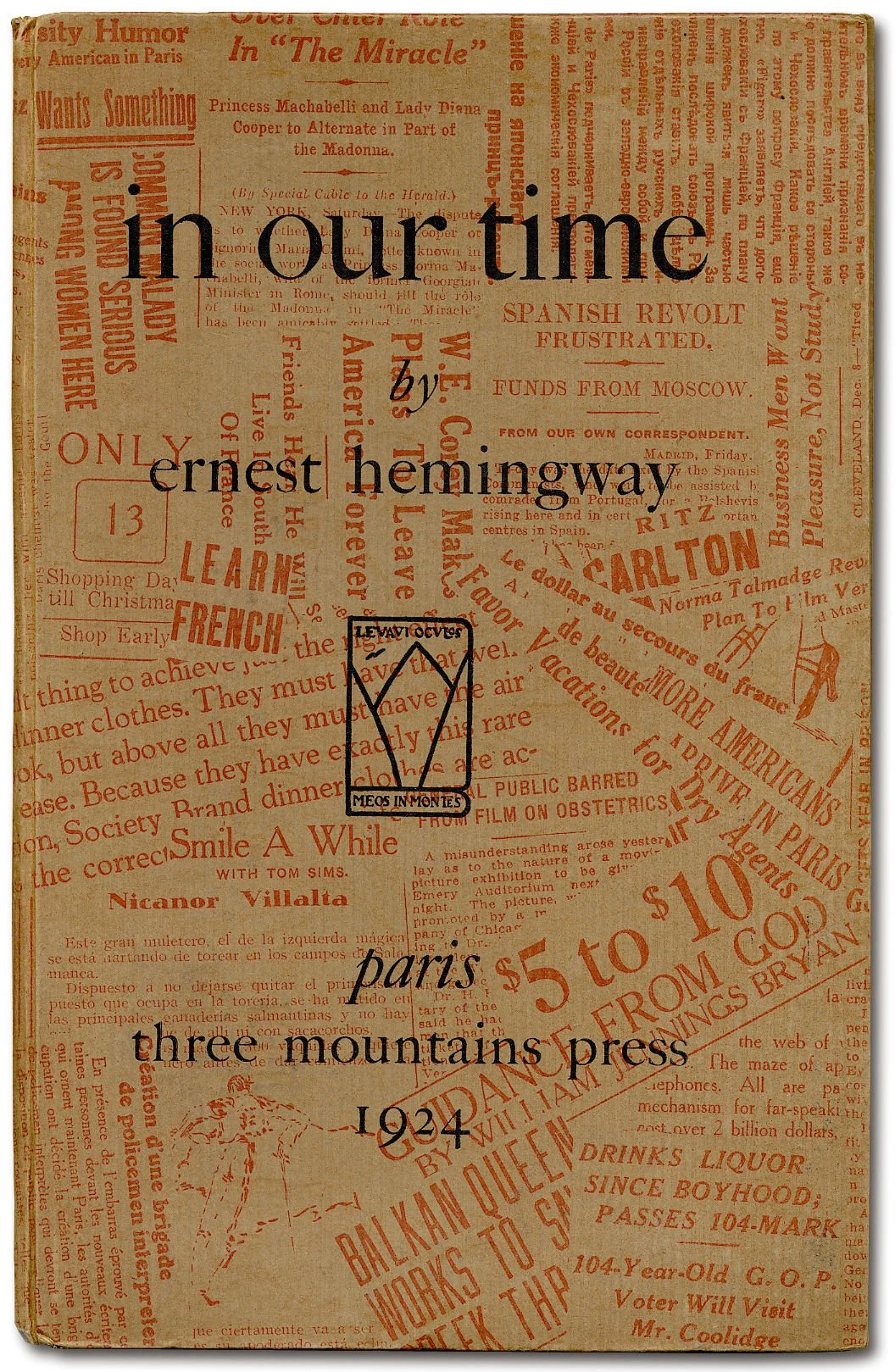
In my first blog on Hemingway’s early book, in our time (1924) I wrote that the short vignettes within the book show how Hemingway’s distinctive voice was forming.
Where did that style come from? One profound influence was his work as a reporter for the Kansas City Star when he was 18. Though he only stayed seven months, the paper’s style guide—favoring short sentences, active verbs, and ruthless clarity—became the foundation of his literary voice. He later said it was “the best rules I ever learned for the business of writing.”
By Craig Mindrum
In my first blog [CM1] on Hemingway’s early book, in our time (1924) I wrote that the short vignettes within the book show how Hemingway’s distinctive voice was forming.
Where did that style come from? One profound influence was his work as a reporter for the Kansas City Star when he was 18. Though he only stayed seven months, the paper’s style guide—favoring short sentences, active verbs, and ruthless clarity—became the foundation of his literary voice. He later said it was “the best rules I ever learned for the business of writing.”
Hemingway also wrote for the Toronto Star and was sent to postwar Turkey and the Balkans as a foreign correspondent. He didn’t cover the fighting directly, but he witnessed the humanitarian disaster after the Turkish army recaptured Smyrna (İzmir). His dispatches from Constantinople and Thrace describe:
Refugee columns in retreat
Executions and forced deportations
The emotional numbness of survivors
These war impressions—fragmentary, unspeakable, raw—echo powerfully in the short, violent vignettes of in our time. This version doesn’t just preview Hemingway’s mature voice. It shows the intellectual and emotional labor of creating that voice.
Several of the vignettes deserve closer attention.
Chapter 6: The execution of six enemy cabinet ministers
Part of the horror of these stories comes from Hemingway telling us terrible events in a dispassionate voice. Here six Austrian military leaders are killed by firing squad in the middle of a rainstorm. One of the ministers was sick with typhoid and the soldiers could not get him to stand up, so he “sat down in a pool of water.” Finally the soldiers’ commanding officer “told the soldiers it was no good trying to make him stand up.” The story concludes abruptly: “When they fired the first volley he was sitting down in the water with his head on his knees.”
That being said, some of the sentences in this chapter read as if they were the parodies of Hemingway’s style that appeared after the author became famous:
There were wet dead leaves on the paving of the courtyard. It rained hard. All the shutters of the hospital were nailed shut.
In his more mature style, Hemingway knew how to mix these cold journalistic sentences with other forms of explication in a more rhythmic way that was slightly more pleasing to the ear.
Chapter 17: Another execution
This chapter describes the 1921 hanging of five men (including three Black men) for unknown crimes at six o’clock in the morning in Cook County jail in Chicago. One was Sam Cardinella, a Chicago mobster. They carried Cardinella out to the gallows and held him up. “When they came toward him with the cap to go over his head Sam Cardinella lost control of his sphincter muscle. The guards who had been holding him up dropped him. They were both disgusted.”
This is followed immediately by a bit of breezy chitchat by the men present. “’How about a chair, Will’ asked one of the guards, ‘Better get one,’ said a man in a derby hat.”
This detail packs a wallop by what Hemingway did not say: That here we have a supposedly upper-class man (who would have been wearing such a hat) observing the executions for sport. He’s an indifferent spectator, possibly representing polite society’s sanitized interest in public punishment.
This vignette continues Hemingway’s theme of death stripped of ceremony. There's no romanticism, no redemption — just the mechanical finality of execution. Cardinella is treated with almost clinical detachment, enhancing the emotional force of the scene.
Chapter 5: A parody of the aristocracy
This chapter opens with unusual language for Hemingway, filled with needless adjectives: “It was a frightfully hot day. We’d jammed an absolutely perfect barricade across the bridge.” And later, as they shot enemy soldiers trying to climb over, “It was absolutely topping.”
One might think Hemingway had suddenly become too expressive until one realizes this is not his narrative voice, but rather a deliberate parody of another voice — in this case, the affected, slang-laden banter of British soldiers reminiscing about colonial or wartime violence.
Hemingway mimics the cheerful, clipped idiom of British officers — the kind who might have served in colonial wars or World War I— casually describing executions or shootings in terms like “jolly good” and “what a lark.” The juxtaposition of this lighthearted tone with the horrifying content — killing helpless men — creates intense irony. The soldiers treat murder as sport.
The unusual use of adjectives like “jolly,” “awfully,” “perfectly topping” is not Hemingway losing control of his style. Rather, it’s him highlighting the obscenity of euphemistic language in the face of brutality. In these few lines, Hemingway skewers the self-satisfied narratives of imperial war-making. The casualness of the British voices emphasizes the moral numbness and inhumanity bred by long exposure to violence and power.
Because Hemingway does not editorialize, the reader has to do the moral work. He doesn’t say, “These men are monsters.” Instead, he lets their words reveal the dissonance. It’s a classic example of his “iceberg theory” — letting the horror float just beneath the surface.
Chapter 8: Empty promises
In this chapter, Hemingway describes a bombardment during which a man prays to be saved:
Oh jesus christ get me out of here. Dear jesus please get me out. Christ please please please christ. If you’ll only lee me from getting killed I’ll do anything you say. I believe in you and I’ll tell everyone in the world that you are the only thing that matters. Please please dear jesus.”
Though the next night “he did not tell the girl he went upstairs with at the Villa Rossa about Jesus. And he never told anybody.”
It’s brief, but like so many of Hemingway’s vignettes, it delivers a deep psychological and spiritual punch. Hemingway captures a universal and uncomfortable reality — the instinct to bargain with God in moments of crisis, only to discard those promises when safety returns. This isn’t just about a soldier; it’s about us.
The soldier’s plea is sincere in the moment, but it’s hollow — driven by fear, not transformation. There's an implicit critique of the shallow religiosity that surfaces in emergencies but fails to change behavior.
The final line — “And he never told anybody” — is devastating. It suggests a permanent rupture in the soldier’s moral life, possibly a symptom of trauma, cowardice, or the general corrosion of war. Unlike traditional religious narratives where the cry to Jesus leads to redemption, here it leads only to shame and self-deception. Grace is invoked but never received or honored.
*****
In an upcoming blog, Dr. Nancy Sindelar will write about the edition of In Our Time that was published the next year (1925), where the vignettes are woven into transitional pieces between his short stories.
Shadows: Hemingway’s “In Our Time,” Part 1
A strange book, containing the seeds of Hemingway’s mature style
What was Hemingway’s “first book”? Some confusion or disagreement exists in the biographical literature about which of Hemingway’s books came first.
By Craig Mindrum
A strange book, containing the seeds of Hemingway’s mature style
What was Hemingway’s “first book”? Some confusion or disagreement exists in the biographical literature about which of Hemingway’s books came first.
Technically speaking, his first published book was “Three Stories and Ten Poems,” published by Robert McAlmon, a central figure in the expatriate literary scene in Paris. McAlmon’s Contact Editions was known for publishing avant-garde and emerging modernist writers. At the time, Hemingway was just beginning to gain traction as a serious literary voice, and this 1923 collection helped get his name in circulation. It was a private printing of just a few hundred copies, so it isn’t mentioned as much. (Though it does contain “Up in Michigan,” his first serious attempt at fiction.
Often, people refer to In Our Time as his first book, published in 1925, which includes “Indian Camp,” “The Battler,” and “Big Two-Hearted River.”
Sandwiched in between those two, in 1924, a tiny Paris press released a slim, strange volume also called in our time (though using lowercase for the title), containing only a handful of page-long vignettes. No stories, no recurring characters, no clear arc—just flashes: executions, battlefield chaos, bullfights, arrests. It reads less like a narrative than echoes of narratives.
And yet, in these brief and brutal fragments, Hemingway’s revolutionary style was already beginning to form—tentative, experimental, and sometimes shocking.
A book of brevity and brutality
Published by Ezra Pound’s Three Mountains Press in an edition of just 170 copies, the 1924 in our time was part of modernist literature’s sharp break from traditional storytelling. Each piece is just a few paragraphs long, untitled, dropped without explanation into the reader’s hands. The scenes come and go without commentary, without extended plot, often without names.
Some have called these fragments prose poems. Hemingway likely would have rejected that label. But they are unmistakably poetic in the way they compress life into glinting shards. They offer no interpretation, no frame—just violence, distance, and the sound of boots on stone.
In a time when fiction still leaned heavily on exposition, in our time chose omission. It asked readers to do the work of feeling.
The voice begins to form
Despite its minimalism—or maybe because of it—this odd little book holds the DNA of Hemingway’s mature style. The clean nouns. The hard verbs. The moral weight carried by silence. You can feel him discovering the power of implication: that what’s left unsaid might be more important, even devastating, than what’s spelled out.
Some vignettes still land with shocking force. A soldier bleeds out in a German trench, his companion just alive enough to tell the dying soldier that “we’ve made a separate peace.” A matador is injured and then dies. Two Italians in Kansas City are shot and killed for no reason other than they are “wops.” These scenes leave an emotional bruise in just a few lines.
But other passages are clearly the work of a young writer trying things on—sometimes awkwardly, sometimes unsuccessfully.
It’s a record of a young writer figuring out what to say, how to say it, and, more importantly, how much not to say. These fragments are jagged, raw, sometimes deeply unsettling. They are the stripped wires of modernist fiction, humming with tension.
In their refusal to explain, they gesture toward trauma, guilt, failure, and the collapse of old orders. Hemingway didn’t yet have the stories to contain those themes. But he had the shadows.
Craig Mindrum, Ph.D., is a member of the Board of the Ernest Hemingway Foundation of Oak Park. He received his doctorate in an interdisciplinary field of ethics, theology, and literature from the University of Chicago. He is a writer and business consultant.
The importance of fleeing Ernest
Then I'll just have to find some other way of persuading Ernest Hemingway to get out of my head, to move along, to find some other poor soul to bother. Ignoring him doesn't work. Hemingway's stubborn ghost just hangs around, sporting a slight smile on that broad handsome face, a smile that tends to drift toward a know-it-all smirk. His fists are usually planted on his hips and his feet are spread wide apart, as if he's bracing for impact from an onrushing linebacker -- or maybe just a disgruntled literary critic.
by Julia Keller
CULTURAL CRITIC
February 24, 2008
He's at it again. He won't leave me alone. Can you file a restraining order against an author who's been dead for 46 years? Probably not, you say? Rotten luck.
Then I'll just have to find some other way of persuading Ernest Hemingway to get out of my head, to move along, to find some other poor soul to bother. Ignoring him doesn't work. Hemingway's stubborn ghost just hangs around, sporting a slight smile on that broad handsome face, a smile that tends to drift toward a know-it-all smirk. His fists are usually planted on his hips and his feet are spread wide apart, as if he's bracing for impact from an onrushing linebacker -- or maybe just a disgruntled literary critic.
Why can't I simply ignore him? There are plenty of writers adored by other readers but not by me, and I'm not in the least troubled. Those writers don't stick around. They know when to scram. They go their way and I go mine, and everybody's happy.
But Hemingway, the Oak Park native whose prose is so clipped and monosyllabic that you could send it verbatim as a text message and not strain your thumbs, won't go away. He can't take a hint.
Haunting presence
Many times, when I get to the end of a sentence written by somebody else, he's waiting. He stands there, smirking and superior, and darned if he isn't scoffing. I could write it better, the ghost of Hemingway gloats. I could write it cleaner and truer.
David H. Krause is no ghostbuster. His title is much more specific and down to earth: He's associate provost and associate vice president for academic affairs at Dominican University in River Forest. Yet he's helped me come to terms with my Hemingway fixation. Starting Tuesday, Krause will teach a six-week course on Hemingway. It's a project co-sponsored by the university, the Ernest Hemingway Foundation of Oak Park and the Newberry Library, and here's the twist: The class will meet in the house in which Hemingway was born in 1899. The structure at 339 N. Oak Park Ave., open to the public as a Hemingway museum, will be a unique setting for regular conversations about the author, Krause says.
"The more time I spend in his birthplace home, the better I understand the architecture of Hemingway's imagination," he explains. "This is the place where a worldview began to take shape."
Hemingway's family moved into a second house in Oak Park -- that one, at 600 N. Kenilworth Ave., also is owned by the Hemingway Foundation -- when the author was 7. He lived there throughout his boyhood. When he left, he went out into the world and became among the best-known and most-celebrated -- and surely the most widely imitated -- authors of the 20th Century, as famous for his rugged exploits and outsize personality as for his numerous novels and taciturn short stories.
To prepare for my talk with Krause about his site-specific course and why he dreamed it up, I re-read a passel of Hemingway works such as "For Whom the Bell Tolls" (1940), his long, deliberate novel about the Spanish Civil War, and "In Our Time" (1925), the short story collection that constitutes Hemingway's first American publication and includes such classics as "Indian Camp," "The Three Day Blow" and "Soldier's Home."
Curiously, unexpectedly, in the midst of my dutiful re-examination of Hemingway's puny paragraphs and stripped-down sentences, I began rather to ... like them. And to wonder why I'd been so hostile to him in the first place.
Nobody's best friend
It is not, as some people suggest, because of his biography. Hemingway was not especially enlightened when it came to women's equality, and he left behind a trail of broken marriages and damaged children. He could be moody and difficult. He blew through friendships right and left.
But so what? We don't have to invite him to brunch. We only have to read him -- and reading him, after not reading him for a good long while, is a revelation. Habits I had detested before -- the skimpy descriptions, the stingy dialogue, the undernourished plots -- struck me this time around as honest and forthright. His style isn't showy or pretty. It does its job. It stands in wild contrast to the style of authors such as Henry James or Jane Austen or John Irving or Virginia Woolf. They pile up the words, almost as if they want to keep life at bay; he picks one or two words that work for him, and leaves it at that.
Maybe I just had to live my way into getting Hemingway. Maybe I had to be more mature before I could appreciate his words -- words that argue, in their own laconic way, that words don't make much difference, that in the end, we never really understand each other anyway, no matter how hard we try.
"Hemingway was never a personal passion of mine, either -- not like William Faulkner or Toni Morrison," says Krause, who joined the Dominican staff in August after eight years at Columbia College Chicago.
But then he began to teach Hemingway's works, and discovered how they appealed to students. "There's this surface accessibility, but there's also this sense of, 'OK, I get that, but there's something not being said.' There is enough that's puzzling and complicated that it helps students learn to read better."
From Oak Park to everywhere
And reading him in the house in which he was born is a thrill, he says. It's a way of linking an international literary superstar with the tree-lined suburban street down which he once walked. "Hemingway," Krause adds, "was a person who, from this little village of Oak Park, engaged the world."
Hemingway, heaven knows, doesn't need my imprimatur to be considered a great author. He's a consensus pick by all sorts of smart, discriminating people, people such as Krause and the 15 students in his class. But it's nice to know that you can go back to an author you had dismissed and dig through your own prejudices and snap judgments and muddled misreadings and unearth a kind of tragic, abbreviated beauty.
So to the burly, white-bearded ghost of Hemingway, I say this: You've made your point. You can go home now.
They've left the lights on at 339 N. Oak Park Ave.
Julia Keller is an American writer and former journalist. Her awards include the Pulitzer Prize for Feature Writing. This article was featured in the Chicago Tribune Lit Life section.
Nancy Sindelar reflects on writing her book, Part 4
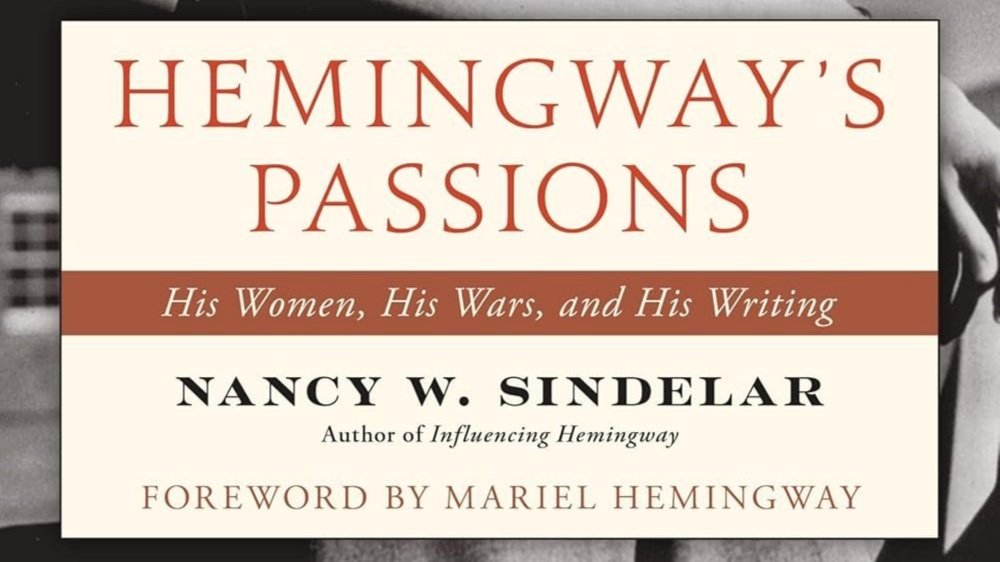
Fourth in a series of conversations with Nancy Sindelar about her new book, Hemingway’s Passions: His Women, His Wars, and His Writing. Available here. Check out the first three blogs at #1, #2, and #3, and watch a preview of the book.
By Craig Mindrum
Fourth in a series of conversations with Nancy Sindelar about her new book, Hemingway’s Passions: His Women, His Wars, and His Writing. Available here. Check out the first three blogs at #1, #2, and #3, and watch a preview of the book.
Interview
Nancy, from which part or parts of your book do you feel you learned the most about Hemingway?
It’s well known that Ernest’s writing is highly autobiographical, but I was amazed at the extent to which the women in his life became major characters in his novels and short stories. Sometimes his wives and ex-wives showed up in his fiction in not very flattering ways. His marriage to Pauline Pfieffer introduced Ernest to the world of wealth, but he later believed money corrupted writers. Eventually, Pauline, who supported him in every way, was transformed into the “rich bitch” married to the failing writer in “The Snows of Kilimanjaro.”
What parts of Hemingway’s life and work should we celebrate and learn from?
Ernest’s success can be attributed to his unwavering work ethic. His parents were very strict and very religious. Their six children were expected to always be doing serious reading or something worthwhile. If the children did something wrong, they were told to kneel on the floor and ask God for forgiveness. There was no fooling around in the Hemingway house.
Ernest desperately wanted to be a writer and didn’t give up or accept rejection. He found women who supported his writing efforts and sought environments to stimulate interesting settings and plots and took risks to produce revolutionary content for his novels and short stories. His mother rejected The Sun Also Rises, telling him it was the filthiest book ever written, but the novel propelled Ernest to fame at the age of twenty-six.
Did you ever feel disappointment with Hemingway as you conducted your research? Or admiration, on the other hand?
Ernest was a handsome, adventurous man who appealed to women of all ages. It’s been fun to research and write about his life and his relationships with women. I believe he truly loved each of his wives, but he also eventually hurt all of them. I used to wear a T-shirt that had an arrow pointing to my face and said, “Hemingway’s Fifth Wife.” After writing Hemingway’s Passions, I no longer feel like wearing the T-shirt.
You sit on the Board of the Ernest Hemingway Foundation in Oak Park, which oversees Hemingway’s childhood home. What aspects of Hemingway’s early life ended up in his short stories and novels? Could we see the beginning of his “passions” even then?
Ernest’s lifelong interest or passion for war was initiated during his childhood and adolescence in Oak Park. Both of his grandfathers were veterans of the Civil War and believed that war was the venue for men to display courage and support strong personal beliefs. When Ernest had the opportunity to drive an Red Cross ambulance in World War I, he jumped at the chance and told his sister, “I can’t let a show like this go on, without getting in on it.” Later he reported on the Spanish Civil War and World War II. As time passed, Ernest developed a fascination for studying men facing dangerous situations and death. Wars stirred this passion and became the setting for some of his most successful novels, including A Farewell to Arms and For Whom the Bell Tolls.
Thanks for speaking with us, Nancy.
Nancy Sindelar, Ph.D., is the author of a new biography, Hemingway's Passions: His Women, His Wars, and His Writing. She is the author of several other books, including Influencing Hemingway: People and Places that Shaped His Life and Work. Nancy sits on the Board of the Ernest Hemingway Foundation of Oak Park, which oversees the Hemingway Birthplace Museum.
Craig Mindrum, Ph.D., is a member of the Board of the Ernest Hemingway Foundation of Oak Park. He received his doctorate in an interdisciplinary field of ethics, theology, and literature from the University of Chicago. He is a writer and business consultant.
Hemingway Villages
Virginia Cassin and I once led a bus tour of Hemingway site in Oak Park with heads of college English departments. They happened to come from the four continents where Ernest had written. Our tour bus was a microcosm of the global village. I asked our passengers who the most significant author in their curricula was. All but one replied, “Hemingway.”
By Redd Griffin
Virginia Cassin and I once led a bus tour of Hemingway site in Oak Park with heads of college English departments. They happened to come from the four continents where Ernest had written. Our tour bus was a microcosm of the global village. I asked our passengers who the most significant author in their curricula was. All but one replied, “Hemingway.”
I then asked them why Hemingway was so highly rated in their departments. An Asian student said it was because his writing was Buddhist; a Latin American, because it was Hispanic; a European, because it was Catholic.
Did they respond this way because Hemingway’s writing faithfully reflected their unique\ ways of life, or because it accurately presented what is common to all of them? Or both?
Whatever the answer, Ernest’s local village of Oak Park probably prepared him to write for a global village. In Oak Park he was first exposed to diverse cultures. He grew up in a family intensely involved with cultures from beyond American borders. His mother, father and their kin celebrated their English heritage and supported their families’ and churches’ missionaries abroad. His extended family and community took advantage of metropolitan Chicago’s multicultural riches, inspired by the World’s Columbian Exposition that occurred just six years before Ernest was born.
His family helped him focus on aspects of life experience all human beings share. Through his father, a physician/ naturalist, he began to discover what was universal in the outside world; and through his mother, a musician/artist, what was universal in the inner world. Through his parents’ and grandparents’ lives and reflections, he became aware of the ultimate realities human beings encounter: love and hate, faith and doubt, good and evil, life and death.
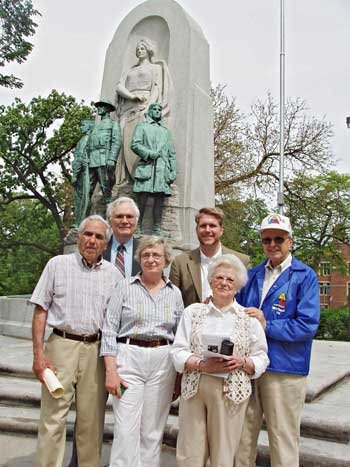
The name “Hemingway, E.M.” along with hundreds of others on the Scoville Park war memorial in Oak Park marks Ernest’s transition from his local village to the global village beyond.
Ernest had an Oak Park address when he was severely wounded overseas in World War I, and he returned home to recover. One day he received a letter from a nurse in Italy ending their relationship that began during the war. In effect, his life at this point merged two villages— local and global. Later his writing would.
These life-changing experiences from 1918 through 1919 inspired his ground- breaking novel of love during war, A Farewell to Arms. His first widely successful book reached readers who related to its 20th century agonies and ecstasies. In this and many other stories, Hemingway captured the best and worst of life in North America, Europe, Asia and Africa. He communicated to his readers what is universal in people’s lives, because of their common humanity. He expressed this directly in the prologue to For Whom the Bell Tolls:
“No man is an Iland, intire of it selfe; every man is a peece of the Continent, a part of the maine” (from a sermon by John Donne).
Like our namesake, our Foundation links our local and global villages. Here visitors from all continents seek information from our volunteers and staff and visit our sites and website. In conferences, discussions, tours, exhibits, performances, print materials and audio-visual productions, the Foundation shares a fellow Oak Parker’s discoveries exploring life here and beyond our village.
Redd Griffin (1938-2012) was Oak Park’s greatest champion of Ernest Hemingway, serving on the board of the Hemingway Foundation of Oak Park, which he co-founded in 1983. He was also a co-founder of the Wright Trust (1974) and the Historical Society of Oak Park-River Forest (1968). Griffin worked at the Chicago City News Bureau and WTTW. He also served as an Oak Park Township Trustee and a state representative of the state's 81st and 82nd General Assemblies.
This article was first published in the Hemingway Foundation Spring Dispatch 2006.
Interview with Nancy Sindelar, Part 3: Hemingway’s infatuation
Third in a series of conversations with Nancy Sindelar about her new book, Hemingway’s Passions: His Women, His Wars, and His Writing. Available here. Check out the first two blogs at #1 and #2, and watch a preview of the book.
By Craig Mindrum
Third in a series of conversations with Nancy Sindelar about her new book, Hemingway’s Passions: His Women, His Wars, and His Writing. Available here. Check out the first two blogs at #1 and #2, and watch a preview of the book.
Interview
Nancy, when Hemingway was almost 50, he developed an infatuation with an 18-year-old woman from Venice named Adriana Ivancich. It is a bit of a curious story. Can you explain what happened with Hemingway at this time, when he was married to his fourth wife, Mary?
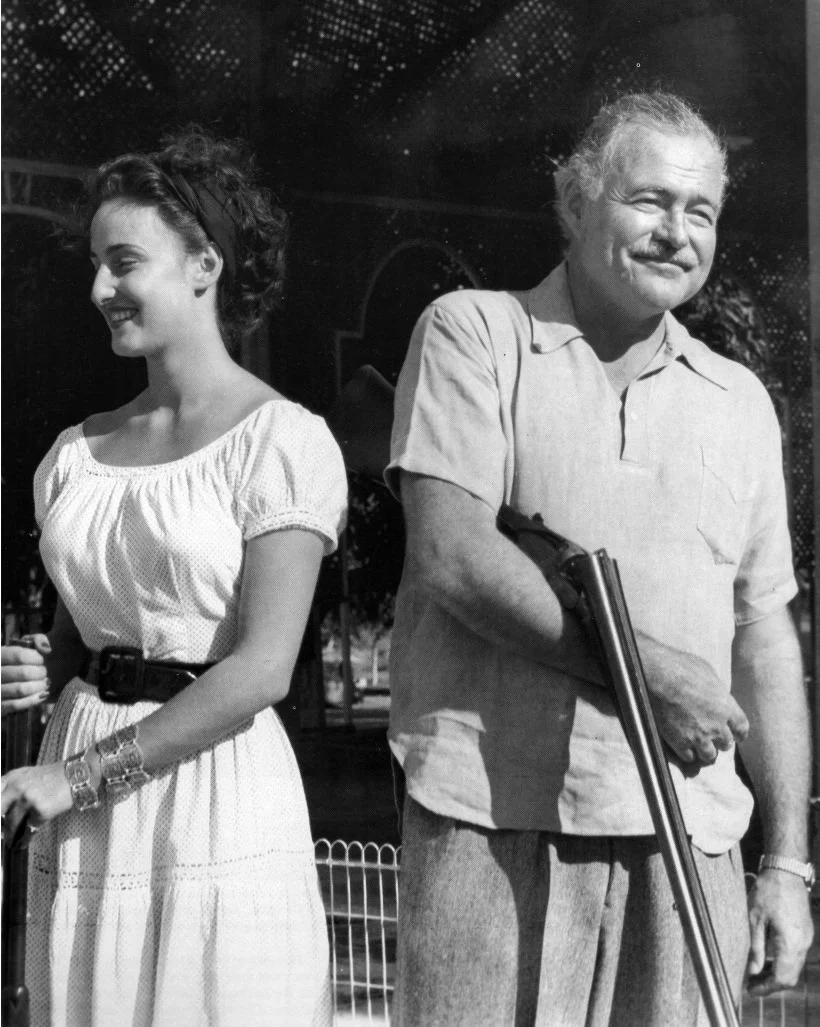
Yes, the story is a bit curious as you say. In my book, I describe this incident at length. In October 1948, Ernest and Mary went to Venice, expecting to spend the fall there. During a day of duck-hunting with an aristocratic Venetian family named Ivancich, Ernest met their 18-year-old daughter, Adriana, and fell head over heels for her.
Though Ernest’s intentions were beyond friendship, Adriana had no romantic feelings for Ernest. Basically, she was flattered by his attention and intrigued by a friendship with a famous author. They saw each other every day during the 1948 visit to Venice, lunching at the Gritti Palace Hotel and strolling along the canals of Venice.
Eventually, the Hemingways returned to their home in Cuba, and one would have thought that was that with regard to Adriana. But then what happened?
What happened was a period of intense correspondence between Hemingway and the Ivancich family, resulting in an invitation for Adriana, her mother, and her brother to visit Ernest and Mary at their home in Cuba. During the visit, Ernest behaved erratically and emotionally. He even tried to precipitate a break with Mary, who refused to leave.
What does this tell us about Hemingway’s occasional “roving eye”?
Ernest’s interlude with Adriana was consistent with his pattern of escaping the routine of married life no matter how good his life was. As with Hadley and Pauline, he had an overwhelming need for a new adventure with a new woman.
Adriana doesn’t just disappear from his life, though. Tell us about that.
Yes, he immortalized Adriana in his next novel, Across the River and Into the Trees. She became the primary heroine of the book, Renata. Not surprisingly, Renata is the young daughter of an aristocratic family in Venice, and Ernest used his own life experiences to create the hero, Colonel Cantwell, an older man infatuated with Renata.
There definitely is some wish fulfillment going on in the novel, as Cantwell and Renata make love in a gondola one night. Though the critics thought the novel was a grueling failure, and even Mary called the dialogue between Cantwell and Renata “banal beyond reason,” the novel was a best seller. But, poor Ernest. He once told Adriana, “I love you in my heart and I cannot do anything about it.” However, she later told friends, “I appreciated his kindnesses and his attention. We were friends.”
What was the longer-term impact on Adriana and her family?
After the publication of Across the River and into the Trees, the Ivancich family faced embarrassment in Venice. People quickly identified Adriana as the Renata character, and the family was at pains to defend Adriana against Hemingway’s insinuations in the novel. Interestingly, one of Adriana’s brothers spoke at the Hemingway conference in Venice and was quick to defend Adriana from false accusations and sought to clarify misconceptions and highlight the depth and complexity of Adriana's relationship with Hemingway.
Nancy Sindelar, Ph.D., is the author of a new biography, Hemingway's Passions: His Women, His Wars, and His Writing. She is the author of several other books, including Influencing Hemingway: People and Places that Shaped His Life and Work. Nancy sits on the Board of the Ernest Hemingway Foundation of Oak Park, which oversees the Hemingway Birthplace Museum.
Craig Mindrum, Ph.D., is a member of the Board of the Ernest Hemingway Foundation of Oak Park. He received his doctorate in an interdisciplinary field of ethics, theology, and literature from the University of Chicago. He is a writer and business consultant.
Hemingway’s Catholicism? Deeper than you might have THOUGHT
By Craig Mindrum
An analysis based on Morris Buske’s essay, “Hemingway Faces God,” “The Hemingway Review,” Vol. 22, No. 1, Fall 2002. Copyright © 2002 The Ernest Hemingway Foundation. Published by the University of Idaho Press, Moscow, Idaho.
A presumption held by many is that Ernest Hemingway became a nominal Catholic only as a requirement before his marriage to Pauline Pfeiffer, his second wife. This turns out not to be true by a long shot.
Hemingway embraced Catholicism while recovering from his wounds suffered when he served with the Red Cross at Fossalta di Piave, Italy. Through the influence of a Catholic priest named Father Bianchi, Hemingway turned to Catholicism while recovering at a religious retreat. Though he may not have “become a Catholic” officially, he saw in Catholicism an answer to his spiritual needs.
In spite of the brave front he adopted about his wounding, Hemingway had suffered great trauma in Italy. According to Buske, “The depth of his spiritual need is reflected in his immediate and wholehearted embrace of Catholicism. H.R. Stoneback quotes him as saying to Thomas Welsh: ‘In first war. . . really scared after wounded and very devout at the end. Belief in personal salvation or maybe just preservation through prayers for intercession of Our Lady and various saints that prayed to with almost tribal faith.’”
Stonebeck also assembled convincing evidence that Hemingway had frequently attended Catholic church services while in Italy. The nurse with whom he fell in love in Italy remembered that, when he was in the hospital, he asked her to go to church with him. As Buske writes, “H. R. Stoneback has assembled overwhelming evidence of Hemingway’s frequent attendance at church services, beginning when he was first in Italy, well before his marriage to Pauline Pfeiffer in 1927. Stoneback effectively dismisses characterization of Hemingway as a ‘nominal’ Catholic “who joined the Church [only] because of pressure from Pauline.”
Hemingway had turned away from the stern Protestantism of his father—its punitive God and its cold and (to him) unsatisfying faith. “While kneeling at Mass or at Confession, contrite,” Buske writes, “he could receive through a Father the promise not of swift punishment but of absolution and redemption.” (His father used severe physical punishment as his primary means of disciplining his young children as they grew.)
Veneration of the Virgin Mary was especially important to Hemingway. Buske quotes Stonebeck again:
George Herter wrote to Stoneback that Hemingway’s religion came mainly from the apparitions of the Virgin Mary…. He told me several times that if there was no Bible, was no man-made church laws, the apparitions proved beyond any doubt that the Catholic church was the true church. Hemingway knew all the apparitions. The ones at Pontmain, Pellivoisin, Allyrod greatly impressed him. He told me that he believed that the Virgin was more or less the listening post of this world for Jesus and God.
Hemingway also donated his Nobel Prize medal to the Virgin of Cobre, Cuba’s national saint.
The harshness and judgmentalism of his parents’ religion was replaced in his adult devotion by a Blessed Mother who offered unbounded love and help. When his troubled father died through suicide, Hemingway had Masses said for him.
As Buske concludes, Hemingway “was free to form a faith which met his spiritual needs and gave shelter from the psychological demons that pursued him.”
Morris Buske was born and educated in Wisconsin where he studied toward a Ph.D. in history. In 1940 he began teaching at Oak Park and River Forest High School, where several colleagues had taught Ernest Hemingway. His many writings include The Record of Mankind (D.C. Heath and Co., 1965) and various articles on Hemingway. The holder of fellowships at Stanford, Wisconsin, and Columbia, he was the founding chairman of the Ernest Hemingway Foundation of Oak Park.
Craig Mindrum, Ph.D., is a member of the Board of the Ernest Hemingway Foundation of Oak Park. He received his doctorate in an interdisciplinary field of ethics, theology, and literature from the University of Chicago. He is a writer and business consultant.
Take That Mom and Dad: Hemingway vs. Halifax Rebel Writer
We'll take a quick look at the novel, John Halifax, Gentleman by Dina Maria Mulock Craik, to explore Clarence and Grace Hemingway’s affection for the quintessentially Victorian John Halifax, then see how Ernest Hemingway went in a completely different direction.
By Eric Kammerer
When we were growing up, if our parents liked something, it wasn’t cool. We defined ourselves by reacting and rebelling against their values and ideals. Great artists from Claude Monet to Marvin Gaye shaped their legacy by creating works that strongly contrasted with their parents’ preferences.
Hemingway's parents held a special place in their hearts for an 1856 book, John Halifax, Gentleman, by British novelist Dinah Maria Mulock Craik. The novel follows the life of a young man who becomes a successful industrialist through faith and determination. To the sternly religious Grace and Clarence Hemingway, the novel confirmed “the Protestant ethic by showing that the virtues that lead to heaven also bring success on earth.” It was a “practical guide to virtue and prosperity."[1] So great was the popular book's impact that the Hemingways named one of their daughters, Ursula, after one of its characters.[2]
Needless to say, that was not the attitude of Ernest Hemingway himself, whose pessimistic writings in the 1920s served as a kind of “corrective to the optimism of late Victorianism and American Progressivism."[3]
We'll take a quick look at the novel, explore Clarence and Grace Hemingway’s affection for the quintessentially Victorian John Halifax, then see how Ernest Hemingway went in a completely different direction.
His Parents’ Favorite Book
John Halifax, Gentleman, was Craik’s best-known work. It was a sensation, racking up sales over 50 years from its 1856 publication, including at least 45 American editions from various publishers.[4] The rags-to-riches tale follows John, an industrious and scrupulously honest orphan, as he works his way up from a laborer in a tannery to a successful gentleman by dint of his fine character and good works. The story is narrated by the son of John's first employer, who idolizes his ideal friend and his equally perfect spouse, Ursula. Though the public was enthralled, critics took a more jaundiced eye. In a review of the book, novelist and critic Henry James acknowledged the force of her inspiration but also observed that Craik “gives us the impression of having always looked at men and women through a curtain of rose-colored gauze."[5]
Superfans
John Halifax, Gentleman was more than a book to Dr. and Mrs. Hemingway, as detailed by Hemingway scholar James Nagel.[6] They read and re-read the book, mentioning it often in their letters to each other. Dr. Hemingway went so far as to prescribe reading the book to his patients. Though it was a work of fiction, the Hemingways spoke of the characters as though they were real, and actively patterned their character and choices as a reflection of the novel's characters. Here's an excerpt from a letter Grace wrote to Clarence:
"I would rather have been the author of that book than any queen on earth, but next to her, I would choose to be a woman such as Ursula March, one who should shed the pure light of her life on all around her, making the world better for her having lived."[7]
And a passage from a letter Clarence sent to Grace:
"Strength certainly comes to us when we appreciate such noble thoughts, purposes, and designs as John and Ursula had."[8]
Sick Loathing and Moron Literature
Unsurprisingly then, the Hemingways reacted to their son's early literary works with disgust. His father packed up and returned copies of the short story collection, in our time, declaring, according to his daughter Marcelline, "He would not tolerate such filth in his home."[9] He urged Ernest to write about more noble characters. Upon publication of The Sun Also Rises, his mother wrote that every page "fills me with a sick loathing."[10]
For his part, Hemingway repaid the favor by telling Grace she read "moron literature."[11]
John Halifax vs. Jake Barnes
While acknowledging there is no evidence Ernest Hemingway ever read his parents’ favorite book, Nagel points out several parallels between John Halifax, Gentleman and The Sun Also Rises: a narrator with a disability, celebrating the virtues of nature (both novels have passages detailing groves of beech trees) and an unconventional, hedonistic female character.
Despite the similarities, jumping between the two novels risks literary whiplash. Faced with losing the water that powers his mill due to machinations of the dastardly Lord Luxmore, an undaunted John Halifax resourcefully switches to steam power. By contrast, in The Sun Also Rises, Jake Barnes takes the role of passive, ironically distanced participant in a love quadrangle. Halifax is given to optimistic pronouncements, as when he tells Ursula, "We mean to be two living Essays on the Advantages of Poverty. We are not going to be afraid of it or ashamed of it. We don't care who knows it. We consider that our respectability lies solely in our two selves." Jake Barnes brims with cynicism, as when he thinks, "I had been getting something for nothing. That only delayed the presentation of the bill. The bill always came. That was one of the swell things you could count on."
Bonds and Battles
The Hemingways’ copy of John Halifax, Gentleman, an edition published in Chicago by Donohue, Henneberry & Co., resides in the Hemingway Archives housed in the Special Collections at the Oak Park (IL) Public Library. Nearby, you can visit the Ernest Hemingway's Birthplace Museum, where you can hear more stories of his bonds and battles with the family by taking a guided tour.
Eric Kammerer is a volunteer docent at the Ernest Hemingway Birthplace Museum. He is a writer from the western suburbs of Chicago.
[1] Mitchell, Sally. 1983. Dinah Mulock Craik. Boston : Twayne Publishers.
[2] Sanford, Marcelline Hemingway. 1962. At the Hemingways. Boston: Little, Brown
[3] Hayes, Peter. 1990. Ernest Hemingway (Literature & Life): Continuum International Publishing Group
[4] Mitchell
[5] James, Henry. 1921. Notes and Reviews. Cambridge, MA: Dunster House
[6] Nagel, James. 1996. Ernest Hemingway: The Oak Park Legacy. Tuscaloosa, AL: The University of Alabama Press
[7] Nagel
[8] Nagel
[9] Sanford
[10] Dearborn, Mary. 2017. Ernest Hemingway: A Biography. New York: Alfred A. Knopf
[11] Westbrook, Max. 1984. “Grace Under Pressure” in Ernest Hemingway: The Writer in Context. Madison, WI: The University of Wisconsin Press
Interview with Nancy Sindelar, Part 2
A continued conversation with Hemingway scholar Nancy Sindelar—author of a new biography, Hemingway's Passions: His Women, His Wars, and His Writing—we began the exploration of how the many women in his life influenced his writing. We continue here.
By Craig Mindrum
In our first conversation with Hemingway scholar Nancy Sindelar—author of a new biography, Hemingway's Passions: His Women, His Wars, and His Writing—we began the exploration of how the many women in his life influenced his writing. We continue here.
Q: Nancy, at the end of your book, you provide an extended discussion of Ernest’s relationship with the famous German-American actress Marlene Dietrich. Tell us more about her.
Nancy: She and Ernest encountered each other on board on the transatlantic liner, Ile de France, in 1934. They became fast friends almost from the moment they met in the ship’s dining room. Only two years older than Dietrich, Ernest nevertheless took on a role that was typical of him---teacher and mentor. Marlene began calling him “Papa”; he called her “the Kraut.”
Later, in an interview with the New York Herald Tribune she called Ernest “the most fascinating man I know.” She said, “if more people had friends like Ernest there would be fewer analysts.” She understood Hemingway’s rules for living and appreciated the various ways in which he put them into action. She called him “the most positive life force I have ever encountered” and believed he found time to do the things most men only dream about.
Q: Did they ever consummate their relationship?
Nancy: All indicators point to “No,” but their friendship survived 27 years, from the time they met until Ernest's death. It was nourished by long-distance phone calls, letters, transatlantic crossings aboard the same ships, dinners at 21 Club in New York, and meetings at the Ritz Hotel in Paris. In a long letter to Dietrich written after finishing his novel, Across the River and into the Trees, Ernest closed with “I love you very much.”
Q: In that same letter, he mentions that he had only been truly in love with five women in his life. This has resulted in speculation by his biographers. What’s your guess?
Nancy: One very safe guess, I think, is Agnes von Kurosky, the nurse who attended him in Italy following his war wounds—and who became the basis for the character of Catherine Barkley in Farewell to Arms. Then I’d add his first wife, Hadley Richardson. She believed in his ability as a writer and encouraged their move to Paris. In A Moveable Feast he later said, “I wish I had died before I loved anyone but her.”
Then there’s Marlene Dietrich herself and perhaps, Adriana Ivancich, the nineteen year old that inspired him to write Across the River and into the Trees. That leaves one opening. Ernest himself would exclude his second wife, Pauline Pfieffer, and his third wife, Martha Gellhorn, from the list. He blamed Pauline for using the “oldest trick” to lure him away from Hadley as she befriended Hadley just to spend time with Ernest. Then he wrote to Marlene that, “I loved Miss Martha I guess but I couldn't stand her.” (She was far too independent for Hemingway’s needs at the time.) That leaves one other wife, Mary. She turned out to be more of a caretaker, and, of course, the executor of his estate. But who really knows for sure? Readers will just have to decide for themselves when they read the book.
Q: Hemingway seems to have been at odds with himself—the desire for a safe and comfortable marriage, at least for a period of time, along with a tendency to not be able to withstand women who set their eye on him (like Pauline Pfeiffer and Martha Gellhorn). Can you say something about this tension?
Nancy: He did indeed have that conflict, because he sincerely wanted to be a faithful husband. He was brought up in a religious household where you had one wife for your entire life. But he also had this tendency of wanting to move on. Often, though, the women came to him, attracted to his masculinity—a hunter, a fisherman, and an adventurous risk-taker. And, when he was young, he also was very handsome.
In a letter written late in his life to his friend F. Scott Fitzgerald, he talked about his version of heaven. It was a place where you have two houses: one where you live with your wife, and it's a monogamous relationship, and you're happy and you're devoted. Then the other house has seven floors, each with a different prostitute on each floor. That story certainly goes a long way toward describing a kind of “sexual turbulence” within him.
Q: Let’s temporarily end our conversation here. Next time I’d like to explore a couple of other things, such as his late-in-life infatuation with Adriana Ivancich, a young woman from Venice nearly 40 years his junior, who became his muse for a time.
Nancy Sindelar, Ph.D., is the author of a new biography, Hemingway's Passions: His Women, His Wars, and His Writing. She is the author of several other books, including Influencing Hemingway: People and Places that Shaped His Life and Work. Nancy sits on the Board of the Ernest Hemingway Foundation of Oak Park, which oversees the Hemingway Birthplace Museum.
Craig Mindrum, Ph.D., is a member of the Board of the Ernest Hemingway Foundation of Oak Park. He received his doctorate in an interdisciplinary field of ethics, theology, and literature from the University of Chicago. He is a writer and business consultant.